
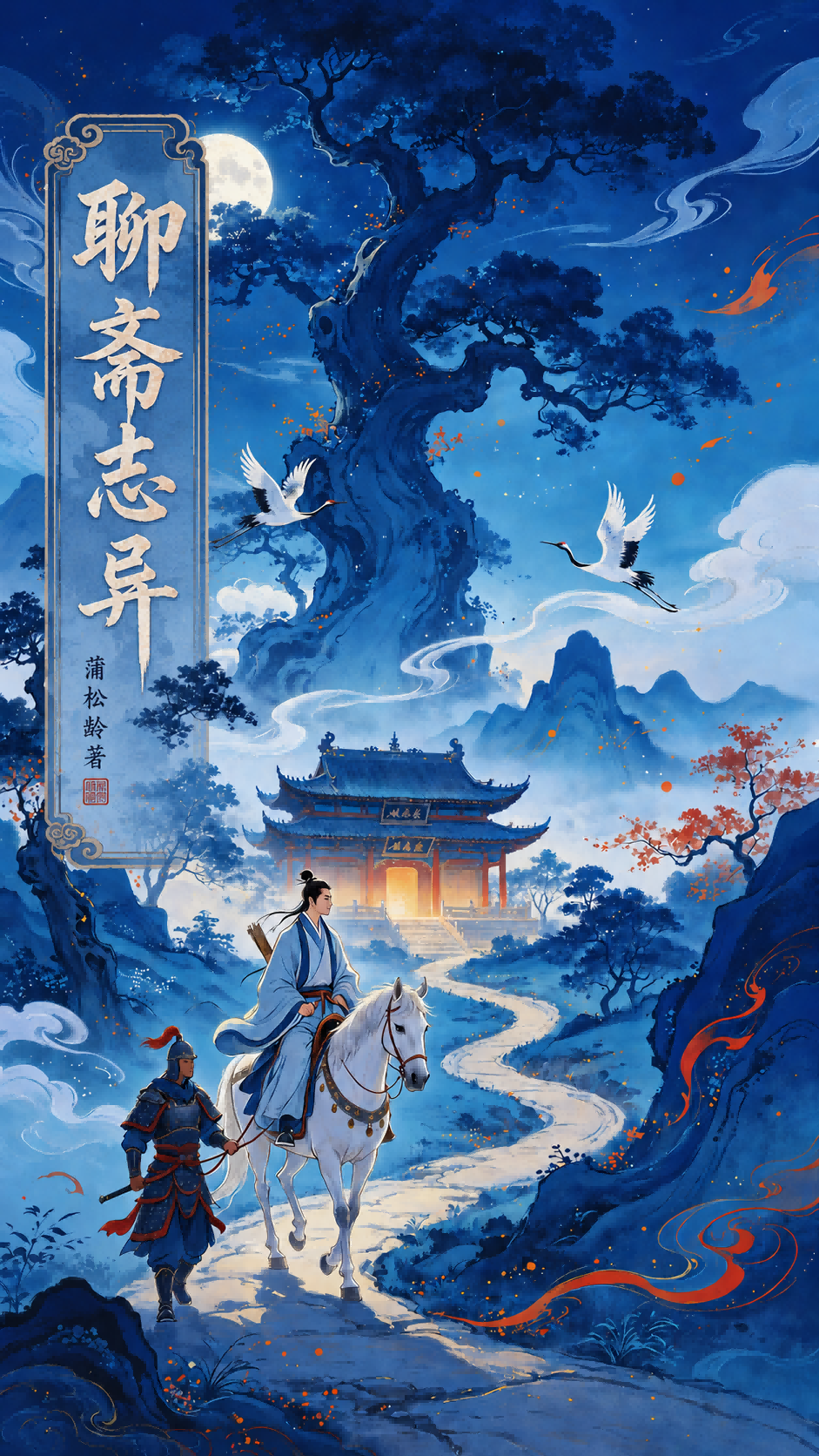
The City God Examination
Mr. Song Tao, the grandfather of my brother-in-law, was a xiucai of the county.
One day, while ill in bed, he suddenly saw a government runner approach, holding an official document in his hand and leading a horse with a patch of white hair upon its forehead. The runner said, “Sir, you are summoned to attend the examination.”
Mr. Song asked, “The Academic Commissioner who presides over the examination has not yet arrived. How can an examination suddenly be held?”
The runner did not reply, but only continued urging him to depart.
Having no alternative, Mr. Song forced himself onto the horse and followed him. The roads they traveled all seemed entirely unfamiliar to him.
Before long, they arrived at a city that appeared like the dwelling place of an emperor. Soon afterward, they entered an official court, where the halls and palaces stood lofty and magnificent.
More than ten officials sat upon the main hall. Most of them were unknown to Mr. Song. He recognized only one among them — Guan Yu, Lord Guan the Magnificent Marquis.
Beneath the hall, before the palace eaves, were placed two desks and two sitting cushions. A xiucai was already seated in the lower place, so Mr. Song sat beside him. Upon every desk were paper and writing brushes.
After a short while, an examination paper bearing the topic suddenly flew down from the hall above. Mr. Song looked at it and saw eight characters written upon it:
“One person, two persons; with intent, without intent.”
After the two had finished composing their essays, they presented their examination papers to the hall above.
Within Mr. Song’s essay was the following passage:
“To intentionally perform good deeds, though good indeed has been done, should not necessarily earn reward. To unintentionally commit evil deeds, though evil indeed has been done, may likewise be exempted from punishment.”
The officials upon the hall passed the essay among themselves while continually praising it.
Thereupon, they summoned Mr. Song to ascend the hall and said to him:
“In Henan, there is presently a vacancy for a City God. You are well suited to assume this office.”
Only then did Mr. Song suddenly understand. Kowtowing as he wept, he said:
“How would I dare refuse such a grave responsibility? Yet my aged mother at home is already over seventy years old, and there is no one to care for her. I beg permission to wait until after my mother has passed away, and only then answer the summons.”
An emperor-like figure seated upon the hall immediately ordered that Madam Song’s allotted years of life be examined.
A long-bearded official took up a register recording human lifespans and searched through it before saying:
“Madam Song still has nine years of mortal life remaining.”
While the officials hesitated in uncertainty, the Holy Emperor Lord Guan said:
“Let the xiucai surnamed Zhang temporarily act in the position for nine years. Afterward, let Mr. Song assume the office.”
The emperor-like figure then said to Mr. Song:
“You should have taken office immediately. Yet in consideration of your benevolence and filial devotion, you are hereby granted nine years’ leave. When the appointed time arrives, you shall again be summoned here.”
He then spoke several words of encouragement to Scholar Zhang as well.
The two xiucai kowtowed in gratitude and withdrew together from the hall.
Scholar Zhang held Mr. Song’s hand and escorted him all the way to the outskirts of the city. Along the road, he introduced himself as a man of Changshan surnamed Zhang. He also presented Mr. Song with a poem as a farewell remembrance.
Most of the poem was later forgotten by Mr. Song, and he remembered only these two lines:
“With flowers and with wine, spring forever remains.
Without candle or lamp, the night shines bright by itself.”
After mounting his horse, Mr. Song bid farewell and departed.
Upon returning home, it seemed to him as though he had suddenly awakened from a great dream.
At that time, however, he had already been dead for three days.
Madam Song heard groaning coming from within the coffin and hurriedly had him helped out. Only after half a day was Mr. Song finally able to speak.
He afterward sent someone to Changshan to make inquiries, and indeed there had been a xiucai surnamed Zhang there who had died upon that very same day.
Nine years later, Madam Song truly passed away.
After Mr. Song finished burying his mother, he bathed and put his affairs in order. Then he entered his room and died.
Mr. Song’s father-in-law lived inside the western gate of the city. One day, he suddenly saw Mr. Song riding upon a splendidly adorned fine horse, followed behind by many carriages, attendants, and servants. Entering the inner hall, Mr. Song bade farewell and departed.
The entire household was astonished and bewildered, not knowing that Mr. Song had already become a deity.
Mr. Song’s father-in-law afterward sent someone to Mr. Song’s native place to inquire after news, only then learning that Mr. Song had already died.
Mr. Song once wrote a brief account of his own life, but regrettably it was lost amid the chaos of war. What is recorded here is only a general outline of the matter.
中文如下:
原文】
予姊丈之祖,宋公讳焘,邑廪生。一日,病卧,见吏人持牒,牵白颠马来,云:“请赴试。”公言:“文宗未临,何遽得考?”吏不言,但敦促之。公力疾乘马从去,路甚生疏。至一城郭,如王者都。移时入府廨,宫室壮丽。上坐十馀官,都不知何人,惟关壮缪可识。檐下设几、墩各二,先有一秀才坐其末,公便与连肩。几上各有笔札。俄题纸飞下。视之,八字,云:“一人二人,有心无心。”二公文成,呈殿上。公文中有云:“有心为善,虽善不赏;无心为恶,虽恶不罚。”诸神传赞不已。召公上,谕曰:“河南缺一城隍,君称其职。”公方悟,顿首泣曰:“辱膺宠命,何敢多辞。但老母七旬,奉养无人,请得终其天年,惟听录用。”上一帝王像者,即命稽母寿籍。有长须吏,捧册翻阅一过,白:“有阳算九年。”共踌躇间,关帝曰:“不妨令张生摄篆九年,瓜代可也。”乃谓公:“应即赴任,今推仁孝之心,给假九年。及期,当复相召。”又勉励秀才数语。二公稽首并下。秀才握手,送诸郊野。自言长山张某。以诗赠别,都忘其词,中有“有花有酒春常在,无烛无灯夜自明”之句。
公既骑,乃别而去。及抵里,豁若梦寤。时卒已三日。母闻棺中呻吟,扶出,半日始能语。问之长山,果有张生,于是日死矣。后九年,母果卒。营葬既毕,浣濯入室而殁。其岳家居城中西门内,忽见公镂膺朱[巾+贲],舆马甚众,登其堂,一拜而行。相共惊疑,不知其为神。奔讯乡中,则已殁矣。
公有自记小传,惜乱后无存,此其略耳。
【翻译】
我姐夫的祖父宋焘先生,是县里的秀才。一天,他生病躺在床上,忽然看见一个官差拿着官府文书,牵着一匹额上生有白毛的马走上前来,说:“请先生去参加考试。”宋先生问:“主考的学政老爷没有来,怎么能突然举行考试呢?”官差并不回答,只是一再催促他起程。宋先生只好支撑着骑上马跟他去了,觉得所走的道路都十分陌生。不久,他们便来到一个城市,像是帝王居住的城市。一会儿,他们进了一座官府,但见宫殿十分巍峨壮丽。大堂上坐着十几个官员,这些人宋先生大都不认识,只知道其中一个是关羽关壮缪。堂下殿檐前放有几案、坐墩各两个,已经先有一个秀才坐在了下首,宋先生便挨着他坐下。每张桌子上都放着纸和笔。一会儿,殿堂上飞下一张写有题目的卷子来。宋先生一看,上面写着八个字:“一人二人,有心无心。”他们俩写完文章后,便把答卷呈交到殿上。宋先生的文章里有这样一句话:“有心去做好事,虽然是做了好事,但不应给他奖励;不是故意地做坏事,虽然做了坏事,也可以不给他处罚。”殿上各位官员一边传看一边不住地称赞。于是便把宋先生召上殿来,对他说:“河南那个地方缺一位城隍,你去担任这个职务很合适。”宋先生这才恍然大悟,一边叩头一边哭着说:“我蒙此重任,怎么敢推辞呢?但家中老母已经七十多岁了,无人奉养。请允许老母死了以后,再来听从调用。”堂上一个帝王模样的人,立即命令查看宋母的寿数。一个留着长胡须的官员,拿着记载人寿数的册子翻阅了一遍,说:“宋母还有阳寿九年。”各位官员正在犹豫不决的时候,关圣帝君说:“不妨让那个姓张的秀才先代理九年,然后再让他去接任。”于是帝王模样的人对宋先生说:“本应让你立即上任,现在念你有仁孝之心,给你九年的假期。到时再召你前来。”接着又对张秀才说了几句勉励的话。两位秀才叩头谢恩,一起走下了殿堂。张秀才握着宋先生的手,一直把他送到郊外,并自我介绍说是长山人,姓张,又送给宋先生一首诗作临别留念,但宋先生把诗中大部分词句都忘掉了,只记得中间有“有花有酒春常在,无烛无灯夜自明”两句。
宋先生上马后,便告别而去。他回到家中,就好像是从一场大梦中突然醒来一样。其时他已经死去三天了。宋母听见棺材里有呻吟声,急忙把他扶出来,过了半天,宋先生才能说出话来。他派人去长山打听,果然有个姓张的秀才,在那天死去了。过了九年,宋母真的去世了。宋先生将母亲安葬完毕,自己洗浴料理后进了屋子里就死了。宋先生的岳父家住在城中的西门里,这天忽然看见宋先生骑着装饰华美的骏马,身后跟随着许多车马仆役,进了内堂,向他拜别离去。全家人都很惊疑,不知道宋先生已经成了神。宋先生的岳父派人跑到宋先生的家乡去打听消息,才知道宋先生已经死了。
宋先生曾写有自己的小传,可惜经过战乱没有保存下来,这里记述的只是个大略情况。
Comments
0